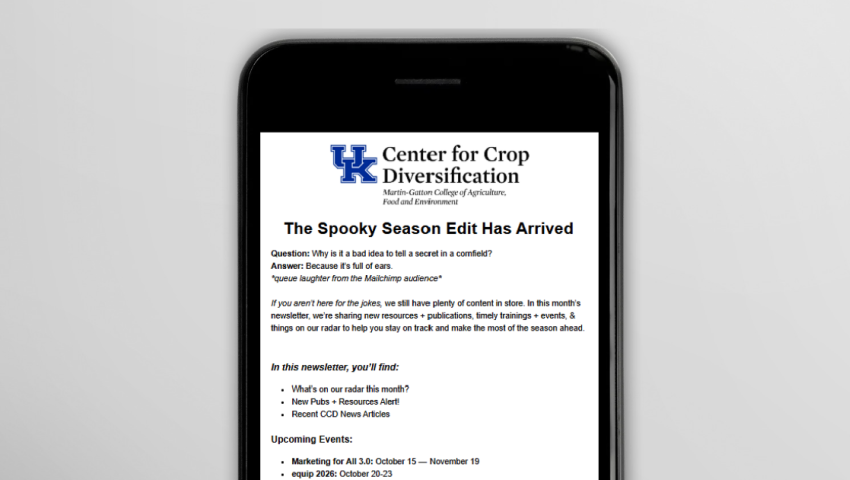
What Your E-Newsletter Open Rate Can Tell You This Fall
As the peak growing season is winding down, it’s a good time to take a fresh look at your e-newsletter performance. One of the first numbers many farms check is their email open rate. Your open rate is the percentage of delivered emails that are recorded as opened, but what does a “good” open rate actually look like?
The current open rate benchmark for the direct-to-consumer farm industry is 35% to 45%, while the general agriculture industry average is around 24%. This is because direct-to-consumer farm newsletters usually reach a tight-knit, local community of market customers, CSA subscribers, or direct supporters who care about your story.
If you are meeting the benchmark – that's great! If you aren’t, don’t worry! Here are some best practices for improving engagement:
-
Use a sender name your audience is familiar with, such as "Savannah from C Acres Farm.” Familiarity and personalization builds trust with your audience.
-
Write a clear subject line (ideally under 50 characters). Give readers a reason to open without being vague or overly promotional. Examples: "First sweet corn is ready!" or "What's in your box this week?”
-
Keep content focused and easy to read. Give each newsletter a clear purpose rather than overwhelming readers with too many messages. Use short sections, descriptive headings, links, and mobile-friendly formatting.
-
Send consistently. A predictable schedule can help maintain audience familiarity and engagement.
-
Segment your audience. When appropriate, tailor content to subscribers' interests or their relationship with your farm.
- Test and learn. Experiment with subject lines, send times, formats, and content.
- Keep your list healthy. Regularly remove inactive or invalid subscribers instead of measuring performance against an increasingly disengaged list.
Remember that open rates vary by industry, audience size, email type, and whether your list consists of highly engaged subscribers. A smaller list of people who bought vegetables from you at a market or joined your CSA will open emails at a much higher rate than a larger, unengaged list. I encourage you to compare your most recent newsletter open rate to the industry benchmark and to your own historical performance. Compare this fall’s open rates with previous newsletters and look for trends. Did a particular subject line generate more opens? Did changing the send time make a difference? Which stories or features generated the most clicks?
This fall, ask yourself:
- How does your open rate compare with last fall?
- Which subject lines performed best?
- What content generated the most clicks?
- Is there anything we should test before the next newsletter?
Email opens are just one measure of a newsletter’s performance. Stay tuned for an additional article on click-through rates and unsubscribes.