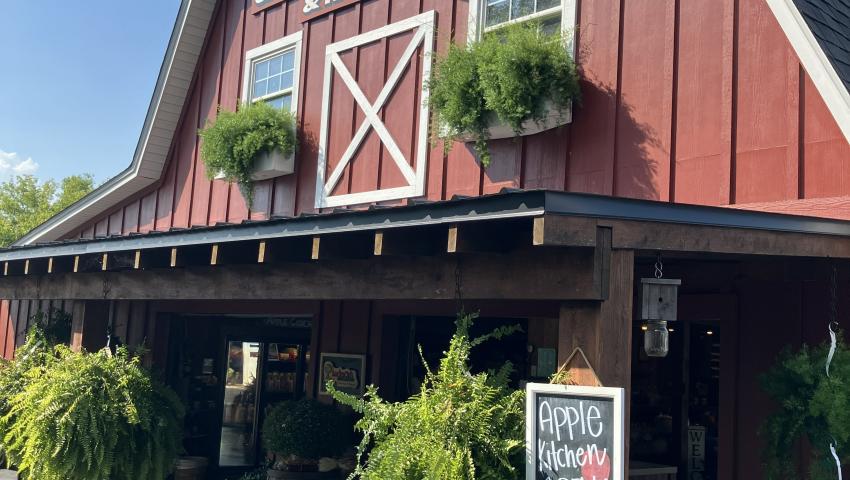
I was fortunate to tour three Western Kentucky agritourism operations: Chaney’s Dairy Barn, Kenny’s Farmhouse Cheese, and Jackson’s Orchard & Nursery. Each farm had its own approach to agritourism, and all the farmers generously shared their expertise with the tour group. Throughout the day, these themes emerged for farmers wanting to consider agritourism on their farms.
Inspiration
As the tour hosts described their farms’ histories, some identified pressure to “get big or get out” as a reason to explore agritourism as an alternative revenue stream. As they decided what form that new revenue stream might take, those farmers toured other farms (particularly in other states or countries) to gain inspiration.
Takeaway: If you don’t have a vision for agritourism on your farm, get outside your immediate region and take a tour.
Agritourism’s Role in the Business Model
Agritourism serves different business purposes from farm to farm. One operation sells 95% of its product through foot traffic to its farm store, while another uses short-term rentals to cover the farm’s utilities. I noticed that none of these farms operated CSAs or a farmers market stand, but all three had a wholesale market. Notably, Carl Chaney highlighted Chaney’s’ farm-to-school milk contract as a way to express their farm’s values. (Though as a family-oriented operation, I suspect school milk also does wonders for brand awareness in their youngest audiences!)
Takeaway: Selling to regional retailers can give out-of-town visitors a way to become a repeat customer.
Scale, Location, and Infrastructure
Infrastructure considerations were very important. We saw that from playground mulch to parking spots, infrastructure can be limited by land, labor, and capital. Tour participants had lots of questions about regulatory considerations such as zoning, insurance, and property taxes. Land constraints, like space available for parking, may especially put limits on the scale of your operation. On the other hand, nearby tourist destinations and sports complexes boosted foot traffic to these farms.
Takeaway: Begin with the end in mind. What choices can you make now that will prevent you from feeling limited later?
Agritourism as Communication
Agritourism might make you imagine pure entertainment—corn mazes, inflatables, photo ops—and admittedly, the farms we toured do entertainment very well. But to me, the PR aspect of each farm was most impactful. Each farm leveraged building architecture (a window to Kenny’s cheese-making room!), signage, and tour content to tell the farm’s story. A visitor may think they’re just having fun, but they’re also learning where their food comes from and why local agriculture matters. One particularly delightful piece of storytelling I saw: Jackson’s original concept sketch displayed in their farm store.
Takeaway: What seems like regular work to you can be an exotic experience to a guest. Can you design your space to let visitors (safely) see your milking robot? Commercial salad spinner? Bouquet-making table?
Final Thoughts
I noted a few practical, feasible steps a beginning agritourism operation can take now to grow their agritourism business:
- Get designation as a Kentucky Farm Bureau Certified Farm Market
- Put up a “Where are you from?” map
- Find out if an association in your industry offers ready-made promotional materials you can display on your farm
- Add diversity and a curated feel to your farm store with brand-aligned resale products.
To discuss your agritourism goals on your farm, contact Annie Scott, CCD Extension Associate, at annie.scott@uky.edu.


