
Let's Talk Calcium
As we enter what is typically the coolest and cloudiest time of year, growers using high tunnels or greenhouses may want to pay a little closer attention to signs of nutrient deficiency in their crops—specifically calcium.
So why calcium, a secondary nutrient, instead of one of the “big three” (N-P-K)? While it’s important to watch for all nutrient deficiencies, calcium issues tend to show up more frequently this time of year. Those growing in-ground in Kentucky may not think much about calcium, since our limestone-based soils usually supply plenty. However, during periods of cooler temperatures and low light, plants may struggle to take up calcium—even when it’s readily available in the soil.
Calcium is taken up by plants through a process called mass flow, which depends on active transpiration. In simple terms, plants need to be moving water from the soil in order for calcium to move into the plant. I like to think of it this way: you’re more likely to drink water when you’re sweating than when you’re not—and calcium moves with water. Low transpiration rates caused by high humidity, low light, or cool temperatures reduce water uptake and, in turn, calcium uptake.
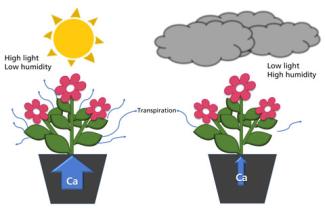
Another important thing to understand about calcium is its immobility within the plant. Once absorbed, calcium doesn’t readily move to new tissues. When transpiration is low, calcium tends to remain in older growth, which is why deficiency symptoms usually appear in newer leaves and shoots. Watch for chlorotic or puckered leaves, necrotic leaf edges, and weak or flimsy stems.
So what should you do if calcium deficiency is affecting your crops? First, ask yourself: Am I harvesting these crops for sale right now?
If the answer is no and the plants are still in a vegetative growth phase, it’s likely not a major concern. As sunlight increases and temperatures warm, transpiration rates will rise and calcium uptake should improve naturally.
If the answer is yes—and sunny days aren’t in the forecast—you may consider a foliar calcium spray. Be sure to target new growth, where calcium demand is highest. Keep in mind that foliar applications are a short-term fix, best used only when transpiration rates are limited. In the long run, maintaining good soil health and conducting regular soil tests remain the most effective strategies for managing calcium nutrition.
For more info, check out:
Secondary and Micro-nutrients for Vegetable and Field Crops